Customers don’t buy from businesses they’re not aware of. It sounds obvious, but most local marketing is built as if the opposite were true: spend the whole budget on the handful of people searching “near me” right now, and hope the rest of the market finds you later.
At Sunray Media Consultants, we do the opposite. We make sure consumers are aware of your brand and your services before they need them, so when the moment comes to buy or to call, they think of you first.
Nobody plans to need you
Think about how people actually come to need a local business. Nobody wakes up wanting to be in a car accident. Nobody schedules their air conditioner to break down in August. People don’t get married every day, and an anniversary comes around once a year, so that piece of jewelry is bought for a moment, not on a schedule.
The need is circumstantial. It arrives on its own timetable, usually unannounced, and when it does, the customer does not start from zero. They start from the names already in their head.
That is the job we do for our clients: we keep them top of mind, so when the need shows up, the customer’s first thought is their brand.
The 95/5 rule: most of your market isn’t shopping today
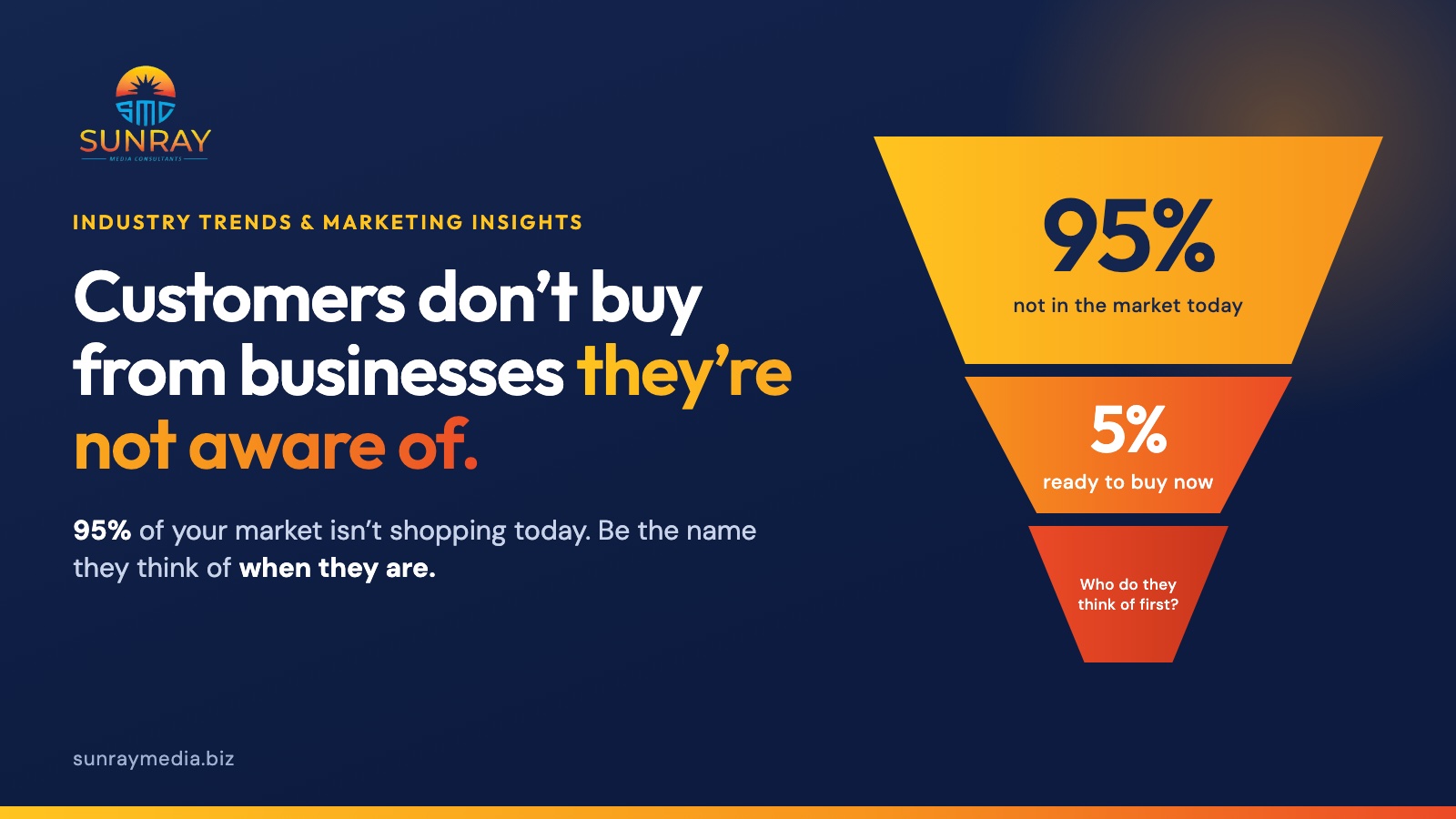
Research from the Ehrenberg-Bass Institute, the world’s largest center for marketing science, put a number on this. In a 2021 paper for LinkedIn’s B2B Institute, Professor John Dawes described what he called the 95:5 rule: at any given time, up to 95% of buyers are not in the market for a product or service. Only about 5% are.
Dawes calls it a heuristic rather than a precise figure, and his research looked at business buyers. But the logic comes from how often people buy in a category, and it applies at least as strongly to the purchases local businesses depend on. A household replaces an air conditioning system every 10 to 15 years, buys a car every few years and may hire a personal injury attorney once in a lifetime. The share of your market ready to buy this week is tiny. The rest will be ready eventually.
95%
of your potential customers are not in the market right now. Only about 5% are. The question is who they will think of when their turn comes.
Why so many agencies only chase the 5%
A lot of agencies and marketing companies focus almost entirely on the bottom of the funnel: the moment someone is ready to buy. Search ads, retargeting, “near me” keywords, lead forms.
It is easy to see why. Performance marketing produces clicks, and clicks are easy to report. You reach people at the exact moment they are ready, so the results look immediate, and there is a dashboard every month that says the campaign worked.
The problem is that every competitor in your market is standing in the same spot, bidding on the same 5%. That makes the bottom of the funnel the most crowded and most expensive place to compete, and the price goes up every year. If your strategy is only optimized for the 5%, you are invisible to the other 95% until the day they need you, and by then it is a coin flip whether they have ever heard of you.
If your marketing is built only for people who are ready to buy today, you’re missing the boat.
The funnel has four jobs, not one
The classic AIDA model describes the path a customer takes: Awareness, Interest, Desire and Action. In plain terms, people need to know you exist, see why you are relevant to them, want what you offer, and then take the step. Bottom-of-funnel marketing only works on people who have already reached the last stage.
Awareness is the stage most local budgets skip, and it is the one that decides everything below it. Nobody can consider a business they have never heard of.
What the coffee market proves about being seen
If you want proof that familiarity wins, look at a category where every competitor sells roughly the same product at roughly the same price. In the U.S. coffee shop market, Starbucks holds about 41% and Dunkin’ about 25%. Two names, 66% of the market, with more than 37,000 outlets and thousands of independents fighting over the rest. And when the category grew, those two brands accounted for roughly 80% of new store openings.
They are not winning on price. Average prices across the major chains are nearly identical. They are winning because when someone decides they want coffee, those are the names that come to mind first. See the full numbers in our brand power case study.
No matter the industry, whether it be coffee, legal services, jewelry or retail, there is a common thread: those who are seen get an unfair market advantage when consumers decide to make a purchase.
The balance that works
None of this means you should abandon the bottom of the funnel. The 5% are real, and you should be easy to find when they search. The point is balance.
Marketing effectiveness researchers Les Binet and Peter Field analyzed hundreds of campaigns in the IPA databank and found that the most effective budgets split roughly 60% toward long-term brand building and 40% toward short-term sales activation. The exact ratio shifts by category, but the direction is consistent: brand building drives most of the long-term growth, and activation harvests the demand that brand building created.
Most local businesses we meet are running closer to 0/100. Fixing that is usually the single biggest improvement available to them.
How we build awareness and a relationship
We focus on building awareness and a relationship between our clients and the people who will eventually need them. That way, when the 95% turn into the 5%, which every one of them does at some point, they think of your brand first. In practice, that looks like:
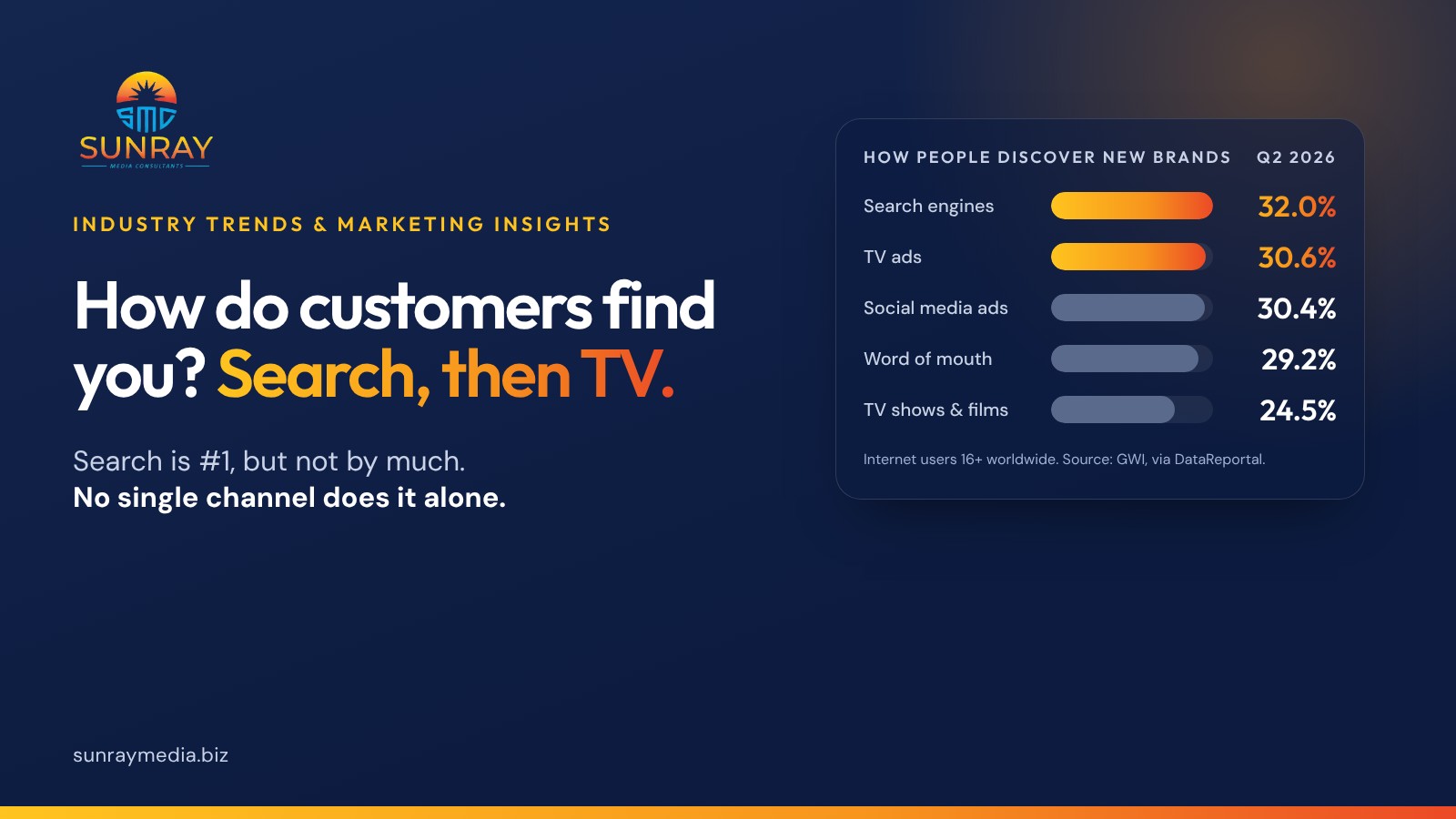
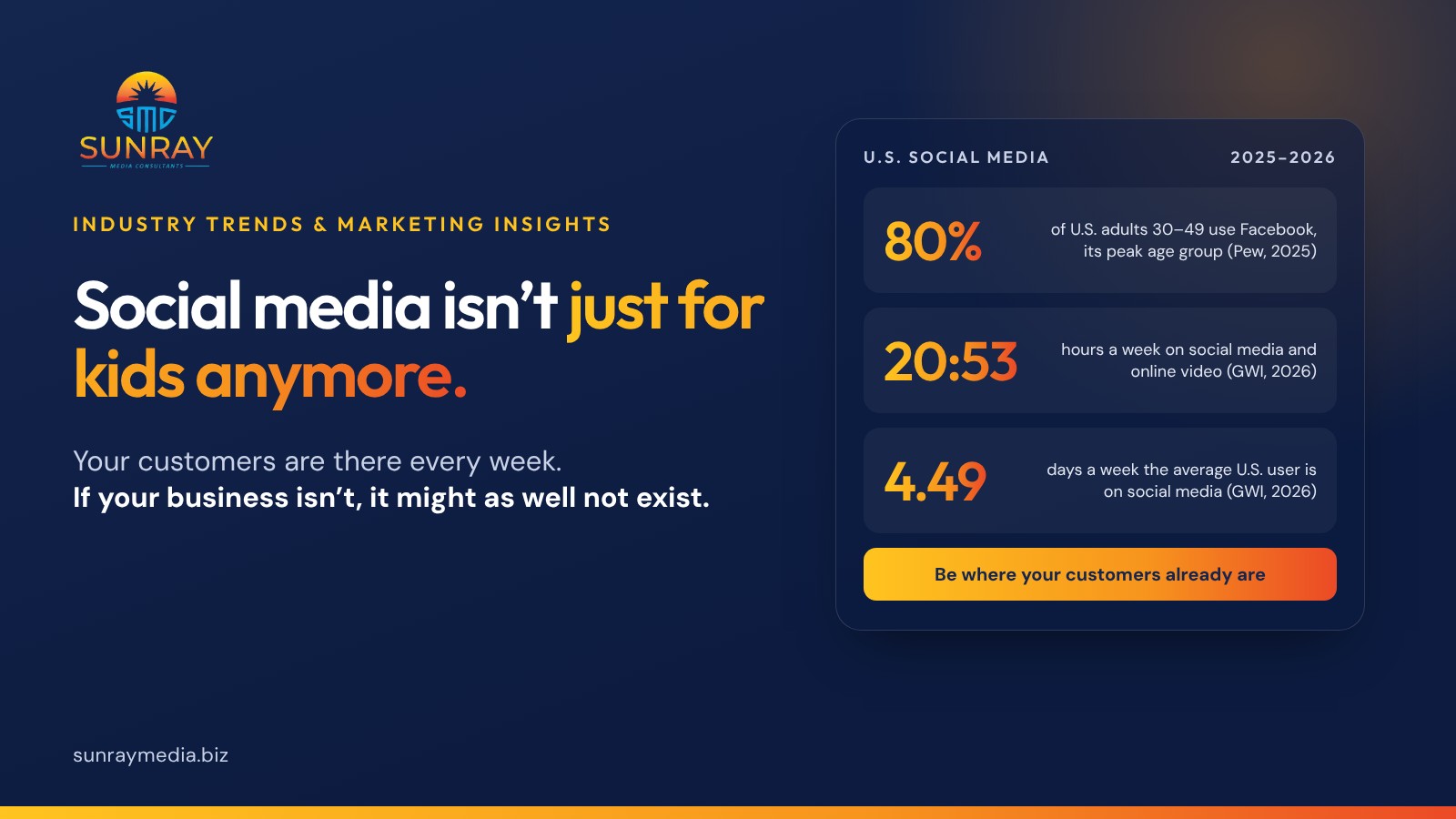
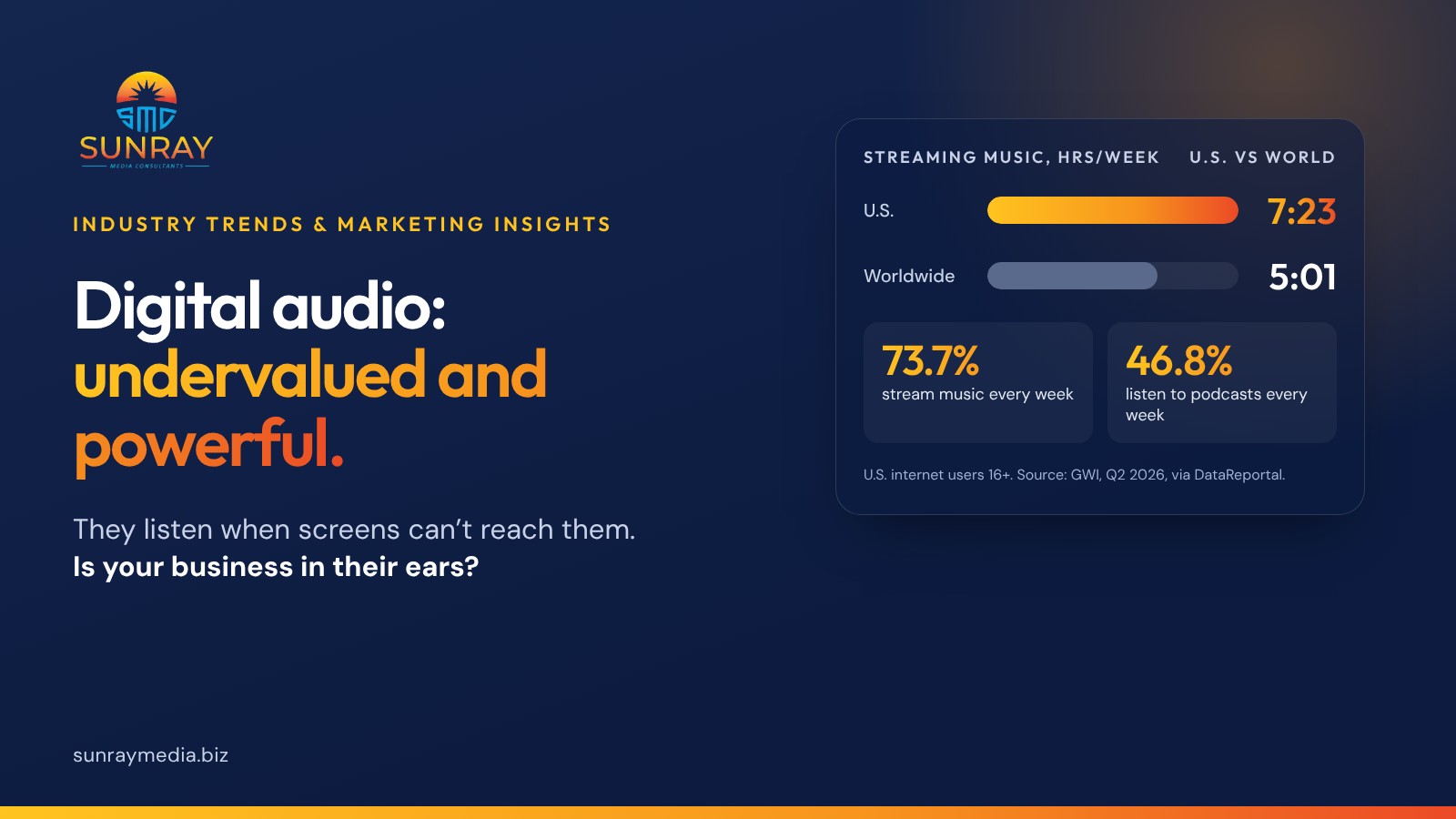
- Being present before the need. Television, streaming (CTV and OTT), radio, social media and outdoor put your name in front of the whole market, not just the people typing a search right now.
- A consistent brand on every channel. The same look, message and tone, month after month, so each impression builds on the last instead of starting over.
- A story worth remembering. Video and audio creative that introduces the people behind the business and the problem you solve, so the brand means something before the customer needs it.
- Still capturing the 5%. Search, Google Business Profile and a website that answers the customer’s questions, so the demand you built has somewhere to land.
- Measuring more than clicks. Branded searches, direct traffic, calls, inquiries and signed business, tracked over months rather than days.
That is how we help local businesses stand out and win in their market: not by outbidding every competitor for the same handful of ready buyers, but by being the name the rest of the market already knows.
Book your free marketing diagnostic with Sunray Media Consultants and we’ll show you how much of your budget is reaching the 95%.
Sources
- John Dawes, Ehrenberg-Bass Institute, “Advertising effectiveness and the 95-5 rule,” published by LinkedIn’s B2B Institute (2021). Summary: The 95:5 rule: why growth starts long before the purchase.
- WARC, “The 95:5 rule isn’t just a B2B thing.”
- Marketing Week, “The 95:5 rule is the new 60:40 rule.”
- Les Binet and Peter Field, The Long and the Short of It (IPA, 2013). Summary: alexmurrell.co.uk.
- Coffee market figures: Statista (2022) and World Coffee Portal / Allegra Group, as cited in our brand power case study.